My Research
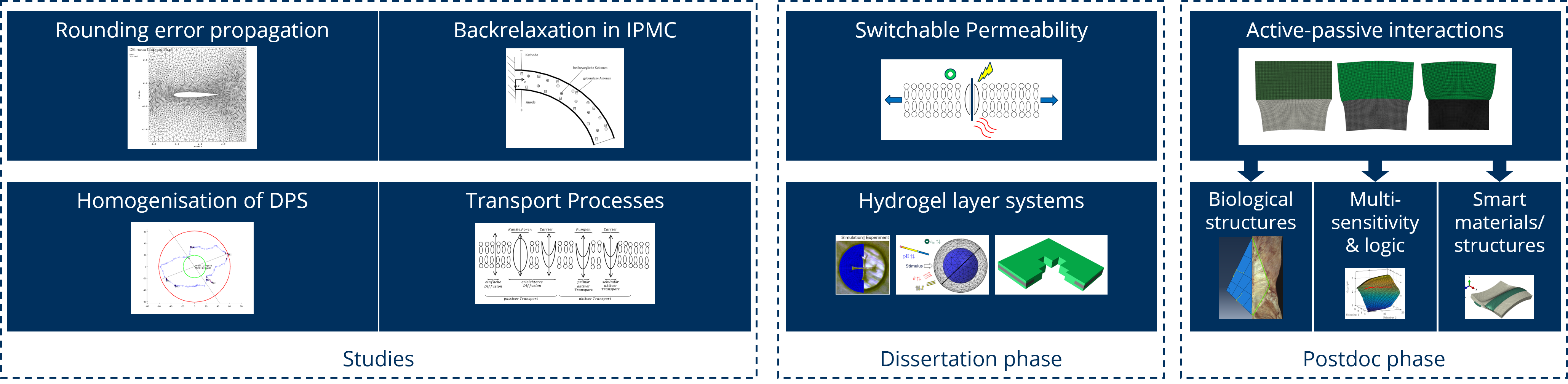
Projects I worked on in course of my scientific career. Here, you can find the different research subjects from the different phases of my scientific career.
Soft-Hard Active-Passive Embedded Structures (SHAPES)
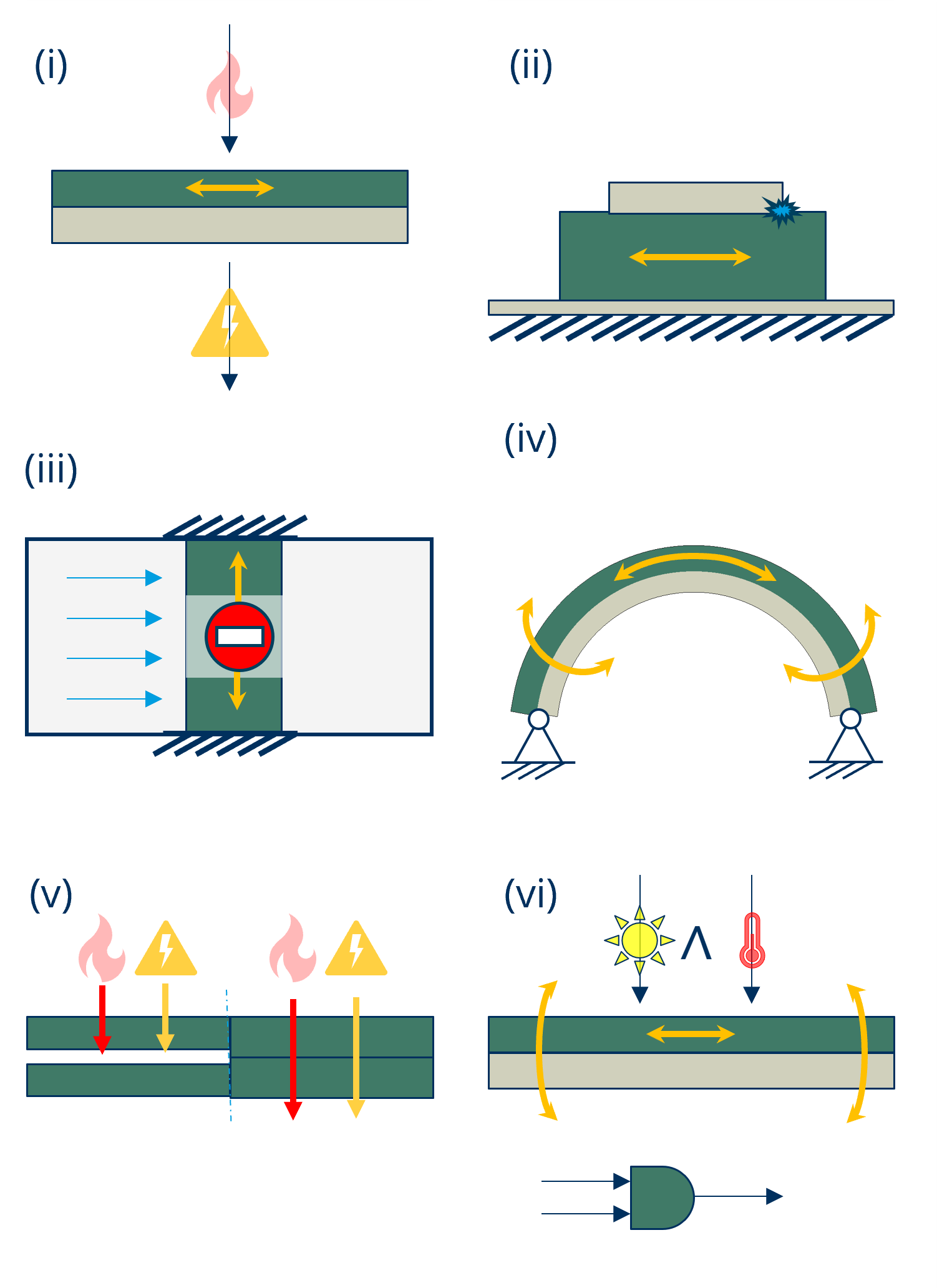
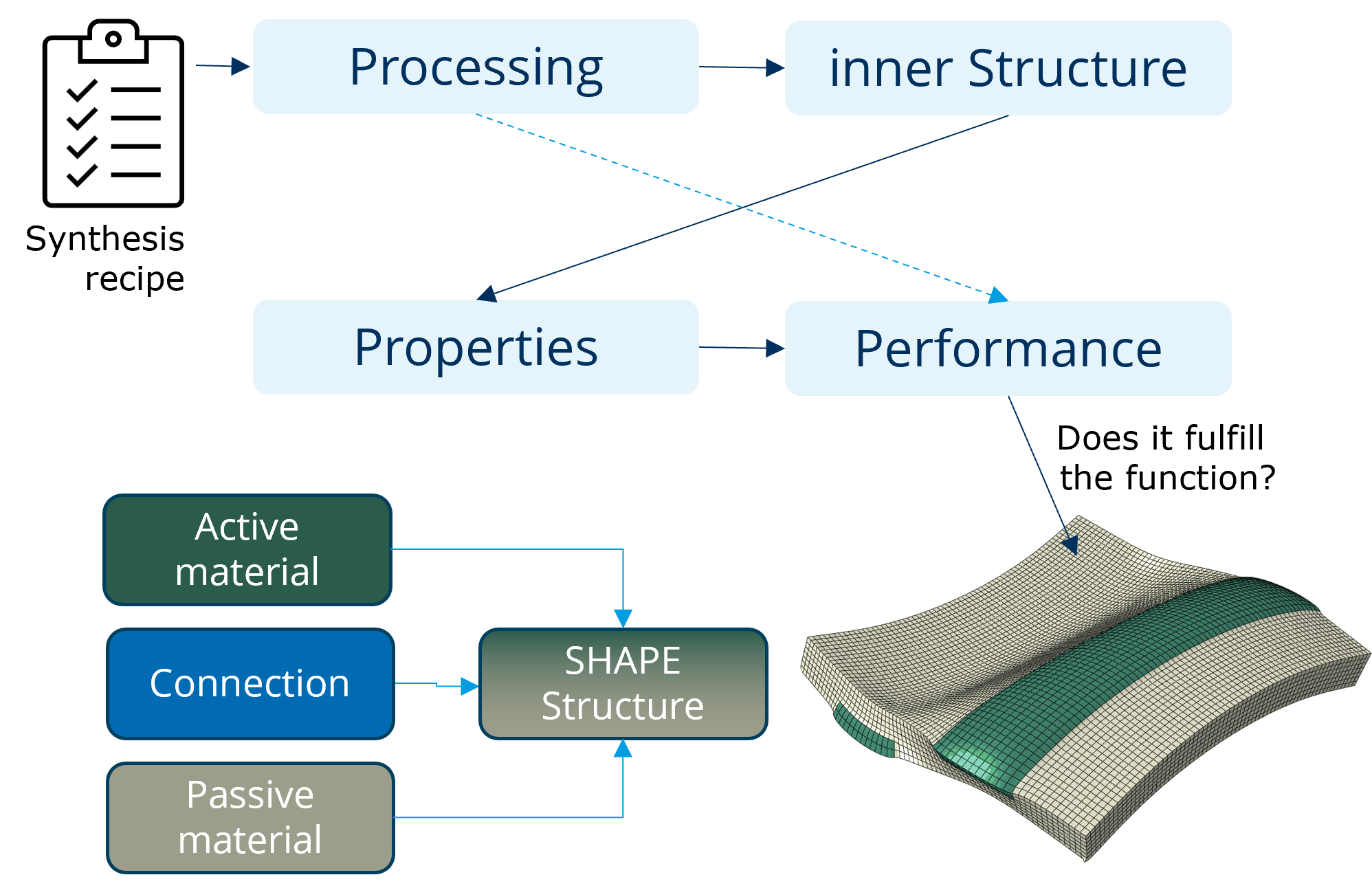
SHAPES are combinations of active (stimulus-responsive, smart) materials with passive materials in the form of composites. They can perform various functionalities beside being actuators: (i) in sensor-actuators, they are used to measure stimuli, (ii) in devices of controlled breaking they can trigger structural failure upon a specific external signal...
One very tangible example is the self-closing mesh: It realizes function (iii) obstruction, i.e., it changes from opened to closed due to a stimulus. The original idea came from cycling to work every morning: If the weather is not clear, I often did not bring my raincovers and was unpleasantly surprised by rain. Applying the SHAPES concept lead to a hydrogel-mesh combination that solves this problem, here: read more.
For more details about SHAPES and how to design them, find all the details in my review in the Journal of Smart Materials and Structures.
Material-agnostic description of active materials with the Stimulus-Expansion-Model (SEM)
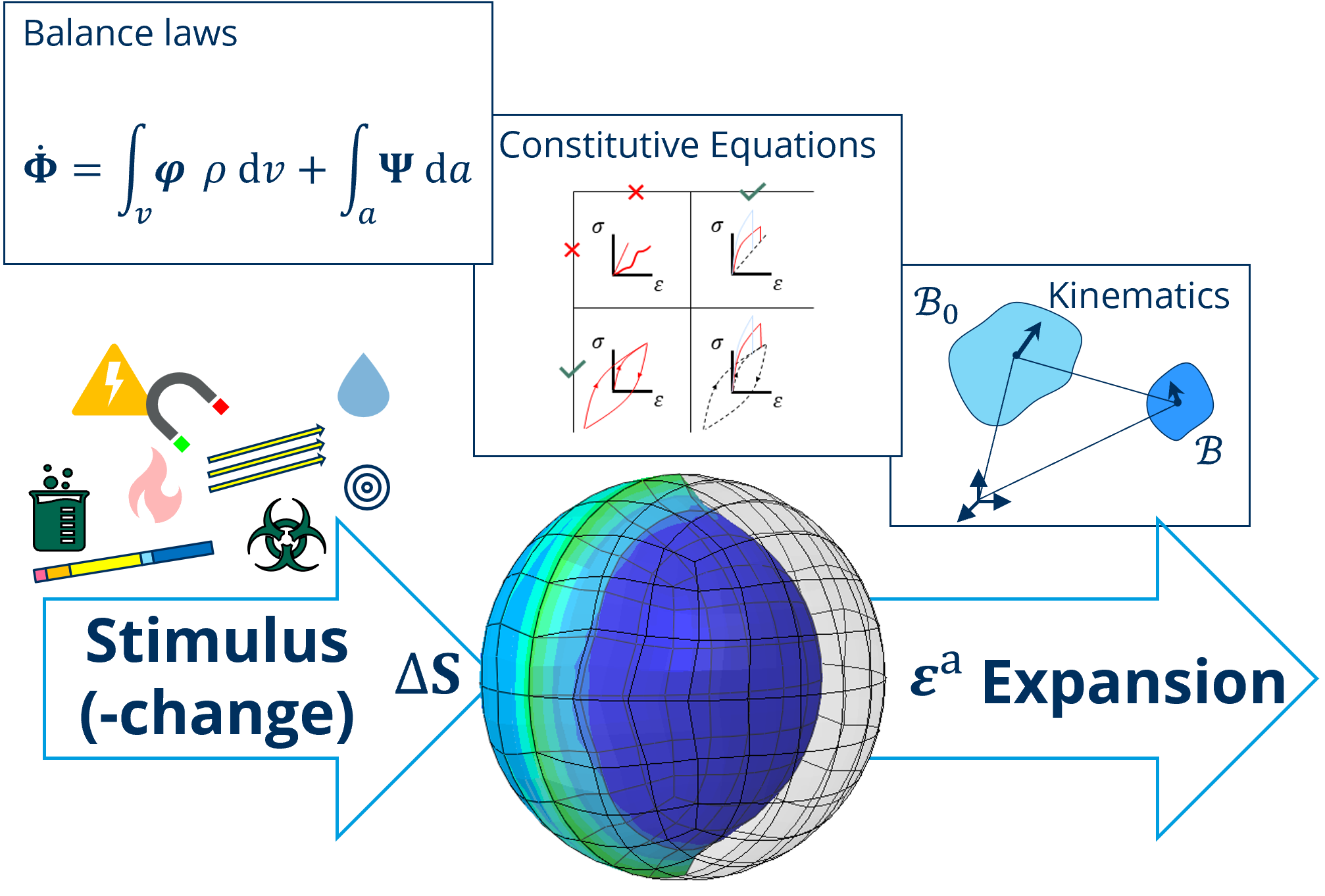
There is a unified way in which active materials can be described through normalization. The approach is based on continuum theory: Balance laws for time-dependent stimulus change; Constitutive equations for the material's response (including (an-)isotropy, (in-)homogeneity and hysteresis (in time and/or space)); Kinematics for movement and deformation...
Together with boundary and initial conditions, a complete field problem is derived. This can be solved by applying computational methods, or via simplifications/assumptions to arrive at structural mechanics theories.
The SEM allows the focused design of SHAPES and is therefore a valuable part in the End2End Engineering approach.
For more details about the SEM and the different model variants - from linearized to nonlinear multi-responsive and time-dependent forms - take a look at my research paper in Acta Mechanica.
End-to-End Engineering of SHAPES
The work at the intersection between data-driven material description and understanding of Soft-Hard Active-Passive Embedded Structures, allows the design of smart structures based on a synthesis recipe by applying methods of Artificial Intelligence...
The final goal is the invertible machine learning model that allows the design of smart systems with desired properties. This framework integrates material synthesis, characterization, constitutive modeling, and structural design into a unified pipeline. By leveraging the whole range from extractive to generative AI models, we can design optimal smart material for a specific application and tailor the final product to the application-specific requirements.
Read more in my publication at the Smart Conference 2025 and my contribution to our arxiv preprint.
Materials Informatics for Hydrogels
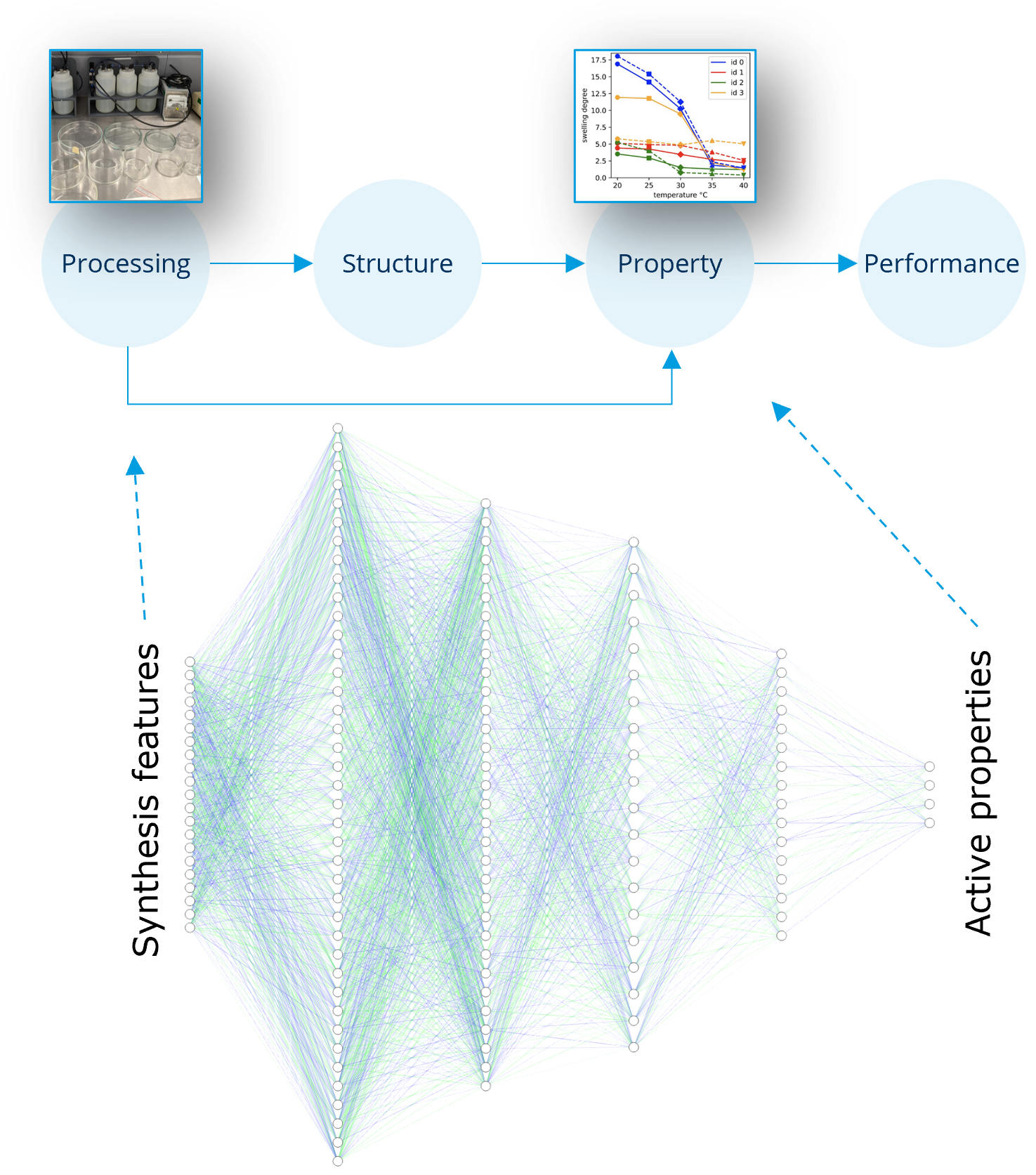
Materials Informatics applies Machine Learning approaches exploratively and for optimization of active materials. Based on the description of synthesis conditions (e.g., monomer concentrations, cross-linking agent, synthesis temperature, etc.), the target property (e.g., swelling curve) can be predicted with Artifical Neural Network models...
The descriptors must be well-defined, as highlighted in Synthesis2Fingerprint. This data-driven paradigm significantly reduces the experimental trial-and-error cycle that is especially unsustainable in polymer synthesis (for active hydrogels that are part of SHAPES).
Read more about this work in our recent publication about "Prediction of hydrogel swelling states using machine learning methods".
Synthesis2Fingerprint
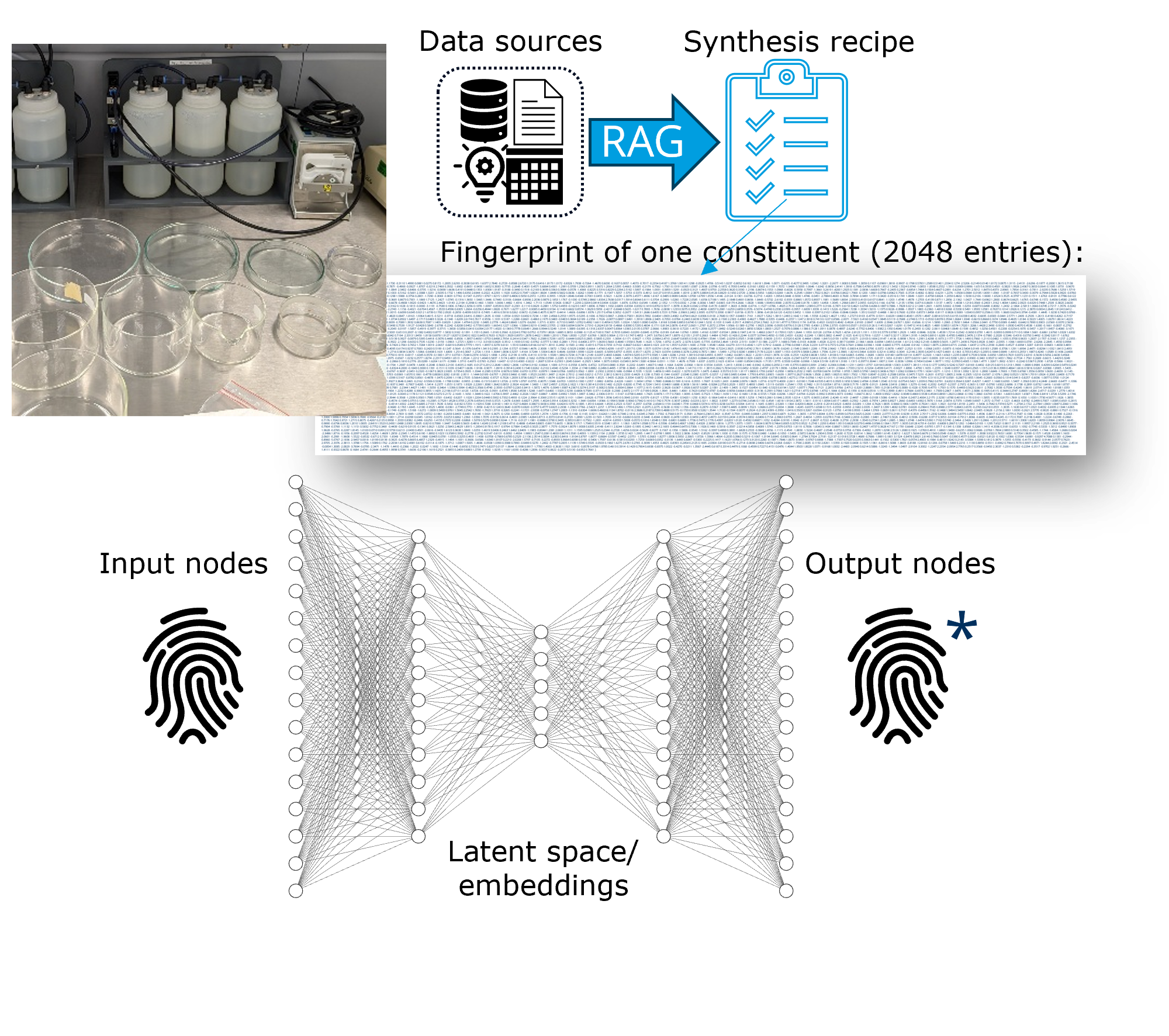
A material fingerprint is a set of descriptors for the material type, how it is fabricated, and its properties (e.g. stimulus-strain behavior). Similar to word embeddings in Natural Language Processing, a material fingerprint is a numeric vector in a high-dimensional space that captures the essence of a material. It is created based on a dataset of synthesis descriptions...
By using natural language representation of chemical formulas and processing parameters, we can employ predictive models (e.g., pre-trained transformer models like GPTs) or extractive models (like GloVe) to generate embeddings. These embeddings can then be mapped to physical properties in the end-to-end engineering framework for SHAPES. This enables transfer learning from vast text corpora to sparse experimental datasets.
Read more about applying LLMs for material property prediction in our recent work about What do LLMs "know" about materials? (in Adv. Eng. Mat.)
Virtual (Histological) Staining
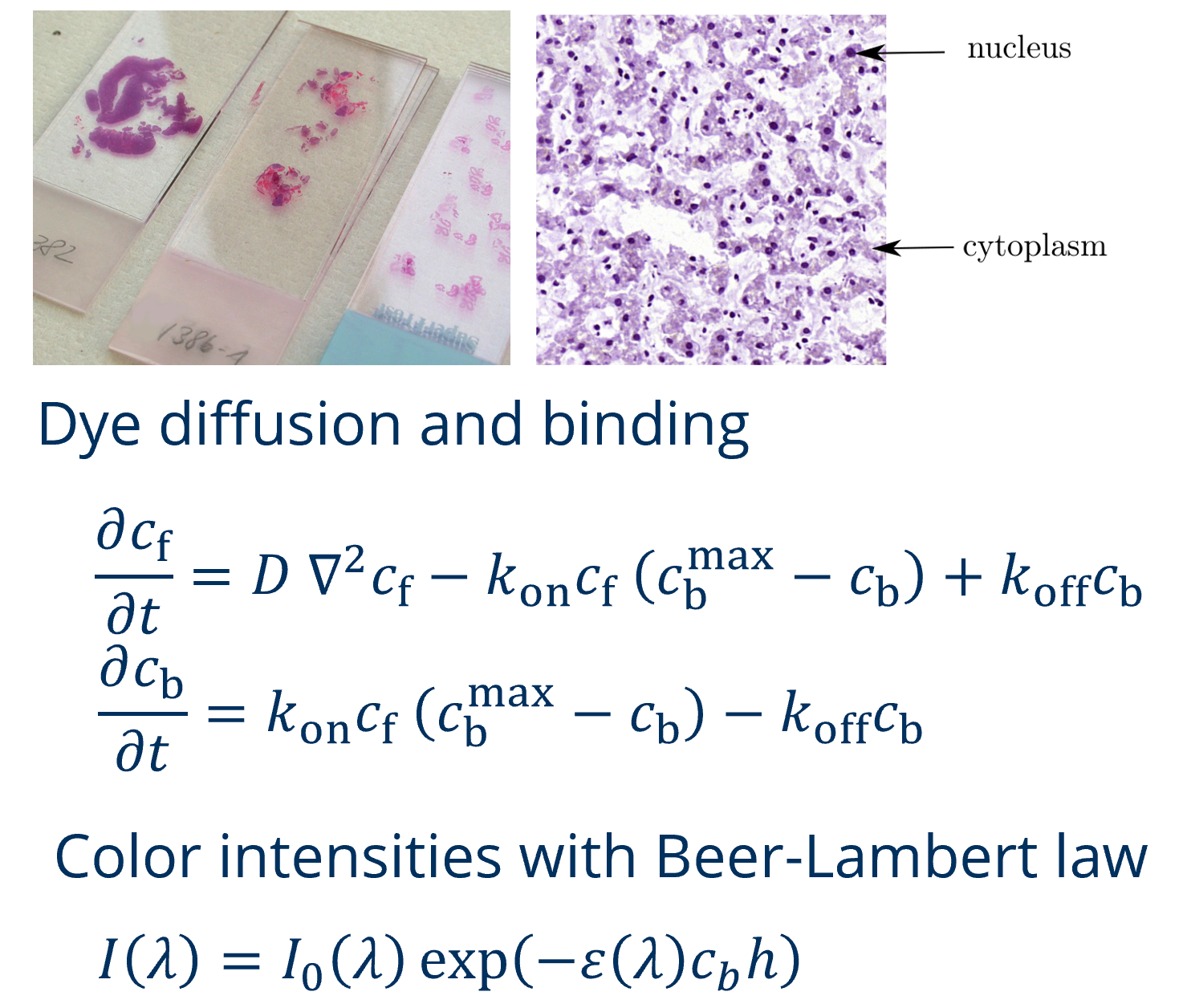
Histological staining with Haematoxilin and Eosin (H&E) is used to highlight tissue morphology for visual analysis. However, different staining times will lead to different colors and a clinicial/pathologist who is used to a certain staining time might misinterpret an image of another staining time. Thus, in consiliary cases, the second opinion might be not as reliable if it is from outside of the clinic...
Virtual Staining applies the principles of multi-field theory to determine the visible color of a tissue slices. By modeling the diffusion of dye molecules and their binding kinetics with specific tissue components, we simulate the staining process in silico. This allows us to computationally normalize stained slides, improving diagnostic consistency and speed.
Read all the details about virtual staining in our publication in the Histochemistry and Cell Biology.
Brain-Computer-Interfaces
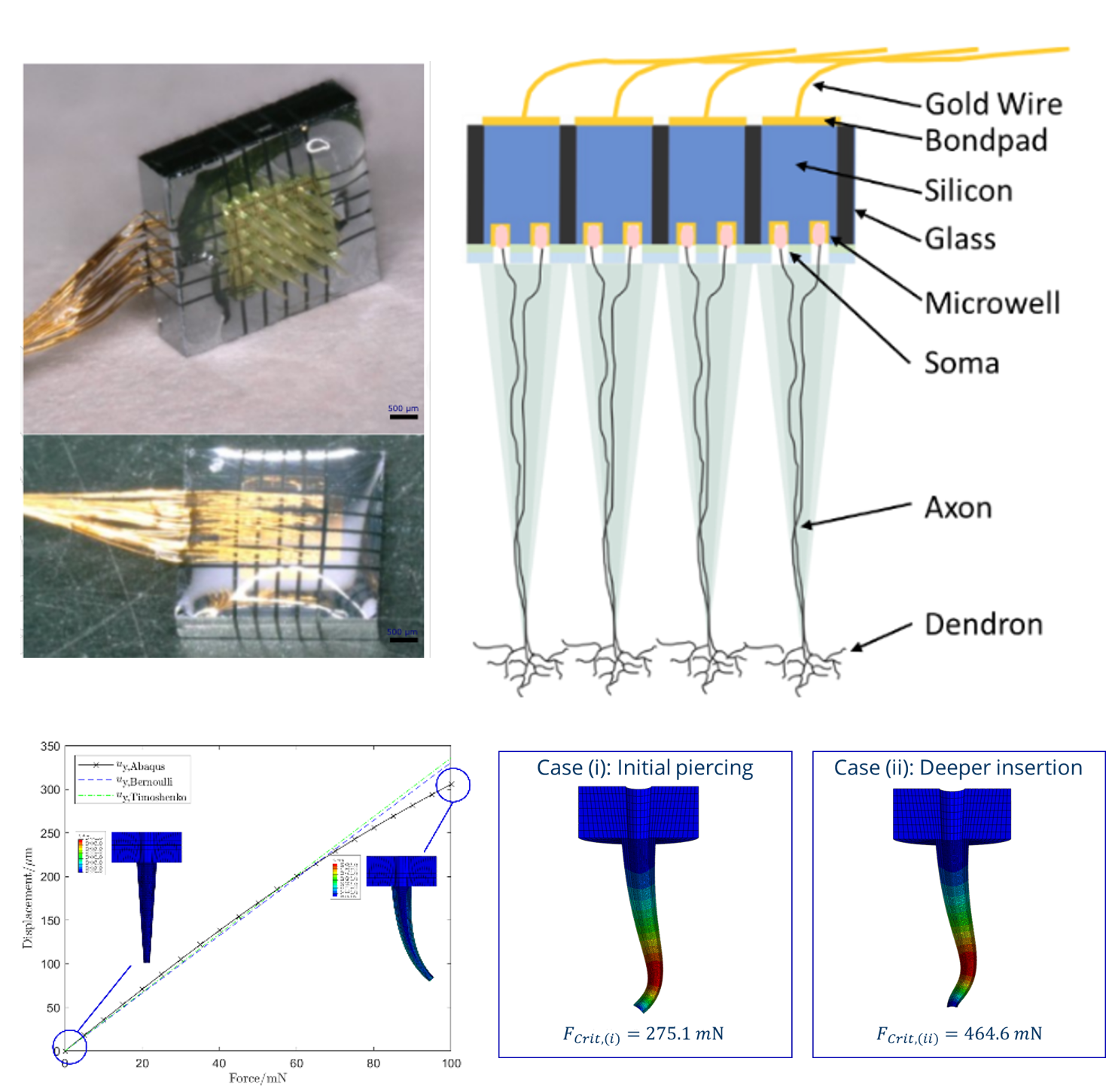
Electrodes can connect to the brain for reading signals and for stimulation. In previous works, we have predicted the buckling behavior of hollow needles - which serve as channels for dendrons to replace the rigid silicon electrodes - during the insertion process.
Our mechanical analysis helps optimize needle geometry and material properties to prevent failure during insertion while minimizing tissue damage. By combining soft hydrogel coatings with flexible conductive cores, we aim to design electrodes that match the mechanical impedance of brain tissue, reducing the chronic inflammatory response.
Learn more about the "Implementation and testing of a biohybrid transition microelectrode array for neural recording and modulation" in our BioRxiv preprint.